Health and Safety Policy for Moving Furniture
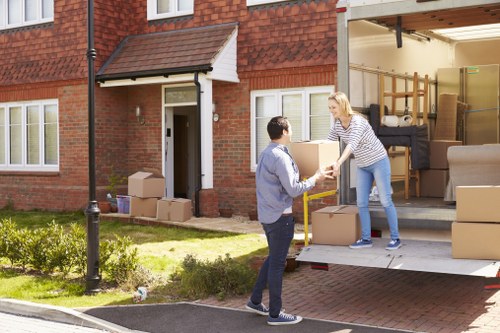 Health and safety is central to every stage of moving furniture. Whether the task involves a single heavy item or a full-property relocation, our policy is designed to reduce risk, protect people, and support safe working practices. This policy applies to all moving furniture activities, including lifting, carrying, loading, unloading, and positioning items in homes, offices, and other premises. It also applies to anyone involved in the process, including staff, contractors, and any persons whose presence may affect safety.
Our approach begins with prevention. Before any furniture move starts, we assess the item, the route, and the environment to identify hazards such as awkward shapes, unstable loads, slippery floors, narrow doorways, stairs, poor lighting, and limited access. We aim to minimise manual handling risks by planning the safest method for each task. When possible, we use equipment and team lifting techniques to reduce strain and improve control. This applies equally to furniture moving in domestic settings and larger-scale commercial work.
All personnel involved in moving furniture must be trained to recognise hazards and follow safe working methods. Training covers correct lifting posture, communication during team lifts, safe use of trolleys and straps, and awareness of pinch points and crush risks. Staff are expected to stop work if conditions become unsafe. No task should continue if a load appears unstable, too heavy, or difficult to manoeuvre without additional support. Safety takes priority over speed, and no one should feel pressured to take shortcuts.
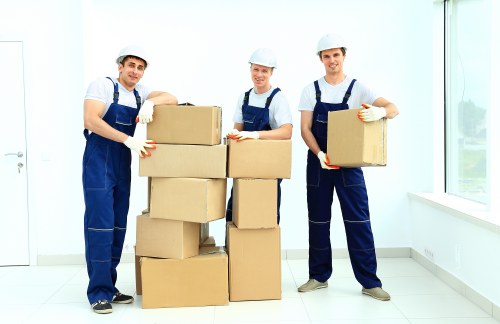
We require suitable personal protective equipment where needed. This may include gloves, safety footwear, and high-visibility clothing depending on the site and task. PPE is not a substitute for proper planning, but it provides an important layer of protection when handling furniture that may be sharp-edged, dusty, or difficult to grip. For furniture removals and similar work, protective equipment must be checked regularly and used correctly.
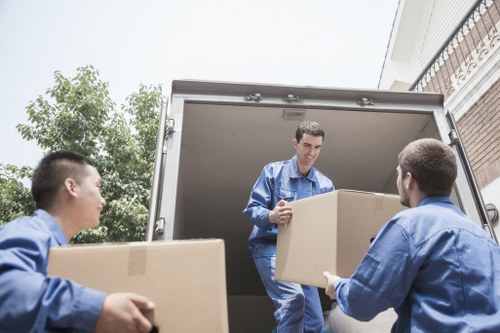 Equipment used in the process must be suitable, maintained, and inspected before use. Dollies, blankets, straps, ramps, and other handling tools should be in good condition and used only by competent people. Defective equipment must be removed from service immediately. We also ensure that vehicles used for transporting items are loaded securely so that objects cannot shift during transit. Safe load distribution is essential to avoid injury and damage.
Our policy also addresses the safety of the surrounding environment. Floors should be kept clear of obstacles, spills, loose cables, and other trip hazards. Doors should be opened and secured where necessary, and pathways should remain unobstructed. Special care must be taken around stairs, confined spaces, and areas with fragile surfaces. When moving furniture through occupied premises, we make every effort to protect both people and property through careful coordination and clear communication.
 In situations involving particularly heavy, bulky, or irregular items, a risk assessment must be completed before the task begins. The assessment considers weight, shape, centre of gravity, distance, obstacles, and the number of people required. If an item cannot be moved safely by manual means, alternative methods must be used. This may include disassembly, mechanical assistance, or staged movement. Moving furniture safely is about choosing the right method rather than relying on force.
Communication is a key part of safe practice. Team members should agree on instructions before lifting or shifting any item. Simple verbal commands such as ???lift,??� ???lower,??� and ???stop??� help prevent confusion. A designated lead person should coordinate actions during more complex moves, especially where multiple items or access challenges are involved. Everyone must remain alert and avoid distractions during the work. Poor communication increases the risk of accidents and property damage.
Health matters are also considered within this policy. Repetitive lifting, twisting, and pushing can contribute to musculoskeletal injuries over time. To reduce this risk, tasks should be rotated where practical, rest breaks should be taken when needed, and individuals should not be asked to handle loads beyond their capability. Any discomfort, strain, or injury must be reported promptly so that the situation can be reviewed and appropriate support arranged. The wellbeing of each person is an essential part of operational safety.
We maintain an incident reporting process so that hazards, near misses, and injuries can be recorded and reviewed. This helps us learn from events and improve our procedures. Corrective actions may include updated training, revised handling methods, or additional equipment. Safety performance is monitored regularly to ensure standards remain effective and consistent across all furniture moving services. Continuous improvement is a core principle of this policy.
 Where customers or third parties are present, they must be kept away from active moving areas unless their involvement is necessary and controlled. Children, pets, and other non-essential persons should not be allowed near lifting zones or vehicle loading areas. We use barriers, verbal warnings, and clear spacing to reduce the chance of accidental contact. Respect for personal safety is part of the professional standard expected during every job.
Emergency readiness is also important. Workers must know how to respond if an item falls, a person is injured, or an access route becomes blocked. First aid arrangements should be available where appropriate, and emergency exits must never be obstructed. If conditions change unexpectedly, the task should be paused until it is safe to continue. A cautious response prevents small problems from becoming serious incidents.
 This policy is reviewed regularly to ensure it remains effective, practical, and fit for purpose. Updates may be made in response to operational changes, incident trends, equipment improvements, or new safety expectations. Everyone involved in moving furniture is expected to follow this policy and contribute to a safe working culture. By planning carefully, using the right equipment, and maintaining clear communication, we can carry out furniture moving work responsibly and with reduced risk to people and property.