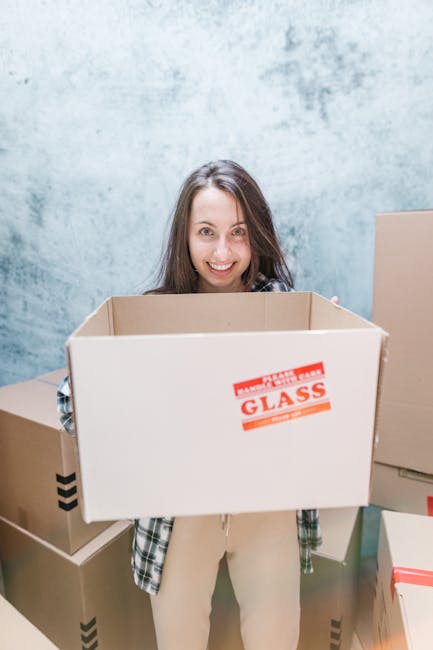
How to pack fragile items like a pro for UK removals
Moving house is stressful enough without hearing that dreaded little clink from a box in the back of the van. If you're wondering how to pack fragile items like a pro for UK removals, you're in the right place. The good news is that it's not magic, and you do not need a warehouse full of supplies. What you do need is a bit of planning, the right materials, and a sensible order of work. Done properly, fragile packing protects your glassware, crockery, ornaments, pictures, lamps, and all the awkward bits that seem determined to break at the worst possible moment.
In this guide, we'll walk through the practical method removals teams use to reduce damage and make unpacking far easier. You'll get step-by-step packing advice, a checklist, common mistakes to avoid, and a realistic look at when it makes sense to bring in help such as packing and unpacking services or a trusted removal company. Let's face it, moving day is busy enough without rewrapping the same mug three times.
Table of Contents
- Why packing fragile items properly matters
- How fragile packing works in practice
- Key benefits and practical advantages
- Who this is for and when it makes sense
- Step-by-step guidance
- Expert tips for better results
- Common mistakes to avoid
- Tools, resources and recommendations
- Law, compliance, standards and best practice
- Options, methods and comparison table
- Case study or real-world example
- Practical checklist
- Conclusion
- Frequently asked questions
Why packing fragile items properly matters
Fragile items don't just break because they are delicate. They break because movement, pressure, vibration, and poor stacking all add up over the course of a move. UK removals bring a few extra realities too: narrow staircases, rainy weather, uneven kerbs, and boxes that may spend a fair amount of time going from hallway to van to new hallway. That's a lot of handling.
Good packing is about controlling those risks. A well-packed box cushions the item, stops items touching each other, and keeps the weight manageable. It also makes loading faster because movers can stack confidently without worrying that a weak box will collapse halfway up the van. If you've ever opened a box and found broken glass because someone "just popped everything in together," you'll know why this matters.
There's another side to it. Proper packing helps you identify what needs extra care on arrival, which rooms those boxes belong in, and which things should be unpacked first. That saves time, reduces stress, and gives you a better start in your new home. A move feels much calmer when the essentials arrive intact.
How fragile packing works in practice
At its core, fragile packing is a simple system: separate, cushion, fill, seal, label, and load with care. Each step matters. Skip one and the whole box becomes less reliable. The trick is not to make a box look full; it's to make the contents immobile.
You start by choosing the right box size. Small to medium boxes are usually better for breakables because they're easier to carry and less likely to be overfilled. Then you create a soft base with paper or bubble wrap, wrap each item individually, and fill any empty spaces so nothing can shift around. That is the whole game really.
Once sealed, a fragile box should feel snug, not rattly. If you can hear items moving when you gently shake it, it needs more padding. In our experience, a quick shake test saves a lot of grief later. A box should be firm but not crushed, and it should lift evenly with two hands.
For removals, this matters even more because the box may be carried downstairs, stacked, and moved several times in a short space of time. If you're using man and van or man with van style help, clear labels and sensible box weight make a noticeable difference to how smoothly the loading goes.
Key benefits and practical advantages
Packing fragile items properly is not just about avoiding breakage. It creates a more organised move from start to finish.
- Less damage risk: items are cushioned and less likely to knock against each other.
- Faster unloading: clearly labelled boxes can go straight to the correct room.
- Safer lifting: smaller, lighter boxes reduce strain and awkward handling.
- Better stacking in the van: stable boxes can be loaded more efficiently.
- Easier insurance conversations: if something is packed properly, it's easier to show care was taken.
- Less stress on moving day: you're not constantly wondering what's inside each box.
There's also a financial upside, even if it's indirect. Replacing broken dinner sets, framed prints, or glass shelves adds up quickly. A little time spent packing well can save you a fair bit later on. To be fair, nobody wants to start their first night in the new place shopping for a new kettle because the old one took a tumble.
Who this is for and when it makes sense
This approach suits almost anyone moving in the UK, but it becomes especially useful if you have:
- glassware, mirrors, or picture frames
- crockery and mugs you actually want to keep
- ornaments, ceramics, or collectibles
- lamps, light fittings, or decorative pieces
- electronics with delicate screens or accessories
- kitchen items with awkward shapes and sharp edges
It also makes sense if you're moving in a hurry, because rushed packing often causes the most damage. If your move is large, involve multiple rooms, or includes office items, you may want to think about professional support through home moves or even commercial moves for business equipment and sensitive items.
Some people only need this level of care for a few treasured items. Others need it for half the kitchen. Either way, the method is the same. The scale changes, not the principle.
Step-by-step guidance
1. Gather the right packing materials
Before you start, make sure you have strong boxes, packing paper, bubble wrap, tape, scissors, markers, and if possible, dividers for glasses or bottles. Old towels or soft linens can help too, but don't rely on them alone for very delicate items. They're useful, not miraculous.
2. Sort fragile items by shape and weight
Group similar items together. Heavy crockery should not go in the same box as delicate stemware, and a framed mirror should not be packed with random kitchen bits just because there's space left. Matching items helps you choose the right level of padding and makes unpacking easier.
3. Reinforce the bottom of the box
Use good quality tape across the base, and don't be stingy. Then add a cushion layer of scrunched paper or soft wrap. This stops the first item from sitting directly on cardboard, which can be a weak point especially if the box gets nudged.
4. Wrap each item individually
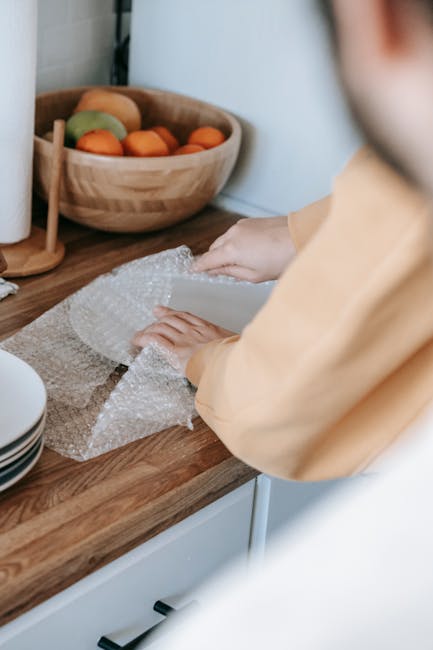
Wrap one item at a time. For glasses, tuck paper inside the bowl before wrapping the exterior. For plates, wrap them flat and place them vertically if the box shape allows it, because the edges can handle pressure better that way. For ornaments, use extra wrap around protruding parts such as handles, fins, or thin stems.
5. Fill every gap
This is where a lot of people go wrong. Empty space equals movement, and movement equals damage. Use crushed paper, soft wrap, or clothing to stop items shifting. The box should feel snug from every angle, but not so jammed that you have to force the lid closed.
6. Seal, label, and mark orientation clearly
Close the box securely and label it on at least two sides. Write the room name, the contents, and a clear fragile note. If the box must stay upright, mark that too. Simple labels save time. You don't want someone putting a box of wine glasses upside down under a heavy lamp by mistake.
7. Keep essential fragile items separate
Some items need immediate access on arrival, such as mugs, plates, or a favourite teapot. Keep those in a clearly marked essentials box. If you're moving with house removals or using house movers, let the team know which fragile boxes should come off the van first.
8. Load carefully and avoid top-heavy stacking
Fragile boxes should not be squashed beneath heavy books or packed tightly against metal furniture. Heavier boxes go low; lighter fragile boxes go higher, but only if the stack is stable. That means no wobbling towers and no "it'll be fine" moments. Those are rarely fine.
Expert tips for better results
If you want packing to feel more professional, a few small habits make a big difference.
- Use more paper than you think: under-packing is one of the biggest causes of movement inside boxes.
- Choose smaller boxes for valuables: less weight means less strain and fewer drops.
- Pack plates vertically: this helps distribute pressure more safely than stacking flat piles.
- Double-wrap high-risk pieces: thin glass, ceramic handles, and decorative stems deserve extra attention.
- Keep item sets together: a 12-piece dinner set is much easier to unpack if it stays in one clearly marked box.
- Don't overuse tape on the item itself: tape should secure the box, not touch the fragile item unless absolutely necessary.
A small but useful trick: leave a little air gap at the top of the box for cushioning, but only after the contents are stable. People often fill a box right to the lid, then wonder why the top layer gets crushed. That happens a lot more than you'd think.
If you've got multiple breakables and a tight move schedule, a company offering removal services can sometimes save you hours. And if you want the move handled as a whole rather than item by item, you may prefer movers who can coordinate packing, loading, and transport in one run.
Common mistakes to avoid
Most damage comes from a few predictable mistakes. Once you know them, they're easy enough to avoid.
- Using boxes that are too large: they become heavy, hard to carry, and more likely to collapse.
- Mixing different fragility levels: one hard object can crack a softer one during transit.
- Leaving empty spaces: even a little movement can chip edges or shatter corners.
- Wrapping too loosely: thin, sloppy wrap does not protect much at all.
- Overloading the box: a box that's too heavy is more likely to drop.
- Forgetting labels: this slows everyone down and increases handling mistakes.
- Packing wet or dirty items: moisture weakens cardboard and can stain paper wrap.
One very common issue is trying to save on materials by using newspaper only. It can work in a pinch, but ink transfer and weak cushioning are real concerns. Better to use clean packing paper if you can. Your plates will thank you. Well, not literally.
Another mistake is assuming "fragile" labels do all the work. They don't. Labels help, but the packing itself is what protects the item.
Tools, resources and recommendations
You do not need specialist gear for every move, but a decent kit makes life easier.
| Item | Best use | Why it helps |
|---|---|---|
| Small and medium cardboard boxes | Glassware, mugs, decor, kitchen items | Easier to carry and less likely to be overfilled |
| Packing paper | Wrapping and cushioning | Fills gaps without making boxes too bulky |
| Bubble wrap | Very delicate or high-value items | Adds extra shock absorption |
| Strong tape | Sealing box bases and tops | Prevents box failure during lifting |
| Markers and labels | Room names and handling notes | Speeds up unloading and sorting |
| Cardboard dividers | Glasses, bottles, small jars | Stops direct contact between items |
For people who don't want to spend days sourcing materials, a professional pack-and-move option through packing and unpacking services can be a sensible choice. It is especially useful if you're juggling work, children, or a lease deadline. If your move is smaller and you mainly need transport, man and van removals can be a practical middle ground.
It's also worth checking the logistics side of the move early. If you need pricing clarity or want to plan the budget before you buy supplies, pricing and quotes can help you understand what level of service fits the job. And if you're wondering who you're dealing with, the about us page is a useful place to learn more about the company behind the service.
Law, compliance, standards and best practice
For ordinary household packing, there usually isn't a special legal rule that tells you exactly how to wrap a wine glass. But there are still sensible UK best-practice expectations around safety, duty of care, and transport. A good removals provider should pack and load in a way that reduces avoidable damage and helps keep people safe while handling boxes, furniture, and access points.
That includes using suitable packaging for the item, keeping walkways clear, lifting safely, and making sure fragile loads are identified where needed. If you are booking a service, it is reasonable to ask how breakables are handled, what insurance arrangements are in place, and whether the team follows a documented safety approach. That's not being awkward. It's just sensible.
If you want reassurance on those points, you may find it useful to review pages such as insurance and safety and the health and safety policy. For customers concerned about payment handling and general trust signals, payment and security and the terms and conditions can also be helpful. Small details, but they matter.
There is also a wider responsibility around ethical operations and sustainability. If that matters to you, it is worth looking at the company's recycling and sustainability approach. Packaging waste adds up during a move, so reuse and responsible disposal are worth thinking about, even for a domestic relocation.
Options, methods and comparison table
There is no single correct way to pack every fragile item. The best method depends on the item, the distance, and how much handling it will face. Here's a practical comparison.
| Method | Best for | Pros | Limitations |
|---|---|---|---|
| Packing paper only | Everyday crockery and light glassware | Affordable, flexible, easy to use | Less protective for very delicate items |
| Paper plus bubble wrap | Mixed fragile household items | Good all-round protection | Takes more time and materials |
| Dividers and wrap | Glasses, bottles, jars | Stops items touching each other | Needs the right box size |
| Blanket and padding combination | Larger decorative items or lamps | Soft support and flexible cushioning | Not ideal for small breakables on their own |
| Professional packing service | High-value, time-sensitive, or large moves | Fast, consistent, less personal effort | Higher cost than doing it yourself |
If you're deciding between packing yourself and getting help, ask two questions: how valuable are the items, and how much time do you realistically have? If the answer is "very" and "not much," professional help often makes sense. If the answer is "mostly mugs and a few frames," you may be perfectly fine packing it yourself with good materials.
Case study or real-world example
Picture a typical Saturday morning move in London. The rain has just eased off, the hallway is full of shoes, and someone is trying to find the kettle before the kettle box has even been labelled. In one room, there's a stack of glasses, two framed prints, a mirror, and a box of ceramic bowls collected over years. Nothing fancy, but all of it awkward enough to break if rushed.
The packing process starts with the glasses. Each one gets wrapped separately, paper tucked inside, then placed upright in a small box with dividers. The bowls go into a second box with plenty of cushioning between them. The mirror is wrapped in a blanket, then edged with cardboard protection. The prints are kept flat and separated so the glass doesn't press against the frame.
By the time the van arrives, the fragile items are clearly labelled, manageable in weight, and easy to load on top of firmer boxes. Nothing rattles. Nothing sinks. When the boxes are opened at the new place, there's a brief moment of relief that feels oddly satisfying. That, frankly, is the whole point.
In a move like this, using removals or even a smaller vehicle through removal van support can make the fragile side of the move feel much less chaotic. And if you need a transport-only option, a moving van can be the right fit when the packing has already been done properly.
Practical checklist
Use this quick checklist before the van leaves.
- Small and medium boxes chosen for fragile items
- Boxes reinforced with strong tape at the base
- Each item wrapped individually
- All gaps filled so nothing can move
- Heavy items kept separate from delicate ones
- Fragile boxes labelled on at least two sides
- Orientation arrows added where needed
- Essentials box set aside for first-night use
- Boxes light enough to lift safely
- High-value items double-checked before loading
Quick expert summary: if a fragile box can rattle, it is not ready. If it is too heavy to lift easily, it is probably too full. And if the label is missing, expect it to end up in the wrong room. Simple as that.
Conclusion
Packing fragile items well is one of those moving tasks that feels small at the start and hugely important later. Do it properly and you protect your belongings, save time, and make unloading far less stressful. More importantly, you give yourself a calmer first day in the new home, which is worth a lot when everything else is still in boxes.
Whether you are handling a few delicate keepsakes or an entire kitchen full of glass and ceramics, the method is the same: choose the right materials, wrap each item carefully, remove movement from the box, and label everything clearly. If the move feels too big to manage alone, there's nothing wrong with getting support from a team that knows the process inside out.
Get a free quote today and see how much you can save.
And when the last box is opened and the first mug is safe in the new kitchen, you'll be glad you took the extra ten minutes. Honestly, that's the bit that makes the whole thing feel worth it.
Frequently Asked Questions
What is the best way to pack fragile items for a house move?
The best way is to wrap each item individually, use small or medium boxes, fill every gap with cushioning material, and label the box clearly. The goal is to stop movement inside the box, not just to make it look full.
Should I use newspaper or packing paper for fragile items?
Packing paper is usually better because it is cleaner, more consistent, and less likely to leave ink marks on plates, glass, or ceramics. Newspaper can work in a pinch, but it is not the first choice for valuable or delicate items.
Are bubble wrap and packing paper enough on their own?
Sometimes, but not always. For everyday fragile items, a combination works well. For mirrors, ornaments, or thin glass, you usually need extra padding, a stronger box, and careful gap filling too.
How should I pack glasses so they do not break?
Put soft paper inside each glass first, wrap each one individually, and place them upright in a sturdy box with dividers if possible. Then fill the remaining space so the glasses cannot move or touch each other.
Is it safe to put plates flat in a box?
It can be done, but plates are often safer packed vertically with padding between them, especially in a removals box. That setup helps distribute pressure more evenly and reduces the chance of cracking.
How heavy should a fragile box be?
Light enough to carry comfortably with two hands. If you have to strain to lift it, it is too heavy. Fragile boxes should protect the contents, not become awkward weights in themselves.
Do I need to write fragile on every box?
It helps, but the label alone is not enough. Clear marking can reduce rough handling and improve sorting, but the actual protection comes from how the box is packed.
Can I use towels or clothes to protect breakables?
Yes, for some items. Soft clothing and towels can add padding, especially around larger objects. Just do not rely on them alone for thin glass or very delicate items, because they are less precise than proper packing materials.
What fragile items should I pack last?
Usually the items you need right up to moving day, such as mugs, a toaster, or a kettle, should be packed last and kept in an essentials box. High-value or rarely used items can be packed earlier once you have the materials ready.
Should I hire professionals to pack fragile items?
If you have a lot of breakables, limited time, or high-value items, professional help can be a very sensible option. Services such as packing and unpacking services can reduce stress and save a lot of time.
What should I do if I am moving fragile office equipment?
For office items, treat screens, monitors, and accessories as separate fragile categories. If the move is business-related, office removals or broader office relocation services may be more appropriate than a standard household approach.
How do I know if a removal company will handle fragile items properly?
Look for clear explanations of packing, handling, insurance, and safety practices. It is also worth reviewing useful pages like insurance and safety and health and safety policy so you understand how the business approaches care and responsibility.